Hunger is EVERYWHERE

Globally, 733 million people, a figure equivalent to the populations of North America and Western Europe, suffer from hunger

Even in a developed region like Minnesota, USA,
more than 300,000 children experience food insecurity

What Is Hunger?

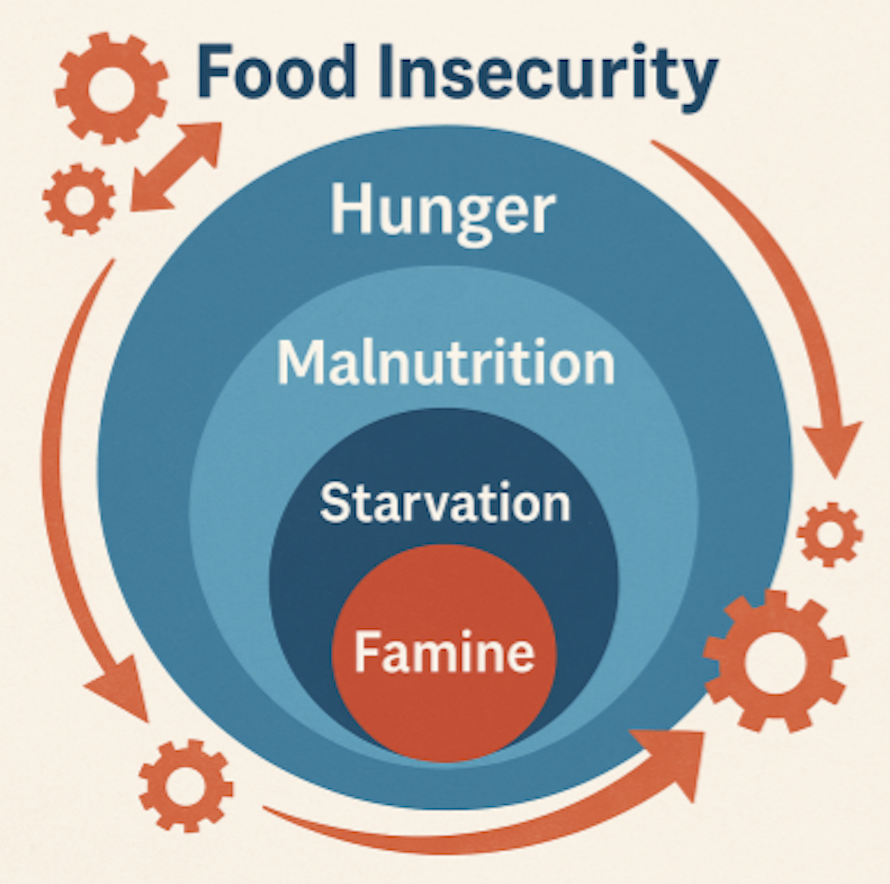
Hunger refers to a sustained lack of food and energy intake, and is a broader concept than...

Malnutrition

A condition of nutritional imbalance. Caused by inadequate intake of essential nutrients or deficiencies in specific nutrients.


Starvation

A state of extreme life-threatening lack of food over an extended period. A critical situation where vital bodily functions begin to shut down.


Famine

A large-scale food shortage at a regional or national level. Officially declared when FAO/IPCC thresholds are met.


What Makes Hunger a Global Crisis?
For children, hunger negatively affects health, learning, and future prospects, as it is linked to delayed development, chronic illnesses, and behavioral issues.
Chronic hunger increases the risk of long-term illnesses like diabetes and high blood pressure, while also contributing to broader declines in overall health and well-being.
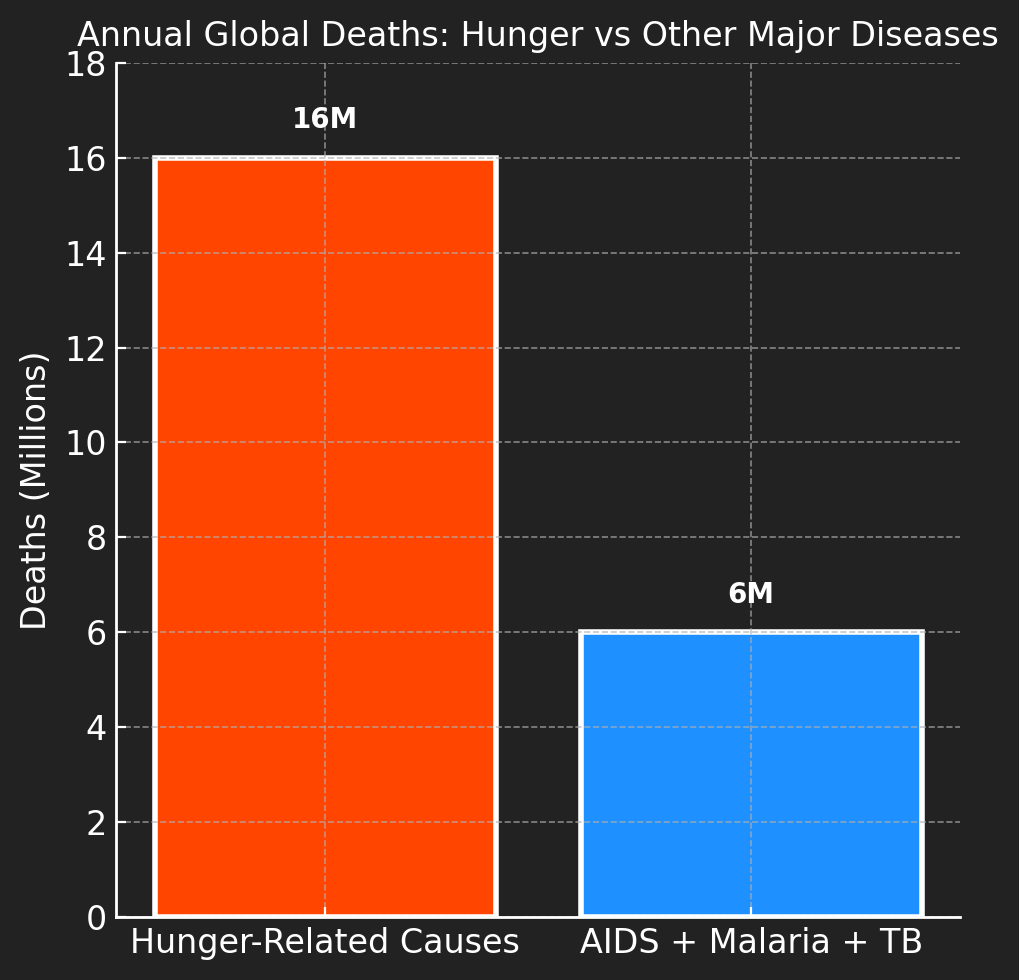
An estimated 16 million people die each year due to hunger and hunger-related causes, which is more than the combined deaths from AIDS, malaria, and tuberculosis
A graph/visual representation of the factual information listed below:
A death due to hunger every 10 seconds, 24,000 people every day; 9 million people die every year due to hunger.